
Creating Defensible Space: Wildfire-Smart Landscaping for Montana Homes
Defensible space is the buffer you create between your home and surrounding vegetation to slow or stop an approaching wildfire. In fire-prone western Montana, smart landscaping choices can be the difference that saves a house.
What is defensible space and why does it matter?
Defensible space is a managed buffer of trees, plants, and materials around your home designed to reduce wildfire intensity and give firefighters a safer area to work. It matters because western Montana's dry summers, abundant conifers, and wildfire history mean many Bitterroot Valley homes sit in or near the wildland-urban interface. Think of defensible space as a series of speed bumps for fire: each zone removes fuel and breaks the path flames would otherwise travel, lowering the chance that a wildfire reaches your walls and roof.
What are the defensible space zones around my home?
Defensible space is typically organized into zones radiating out from the house, each with different goals. The immediate zone, within five feet of the home, should be the most fire-resistant, using gravel, hardscape, and minimal vegetation. The intermediate zone, roughly five to thirty feet out, focuses on breaking up fuels with spacing, low plants, and well-irrigated greenery. The extended zone, beyond thirty feet, emphasizes thinning trees and removing dead material. Working outward in zones lets you concentrate the most protective effort closest to the structure where it counts most.
Which plants are safer near a Montana home?
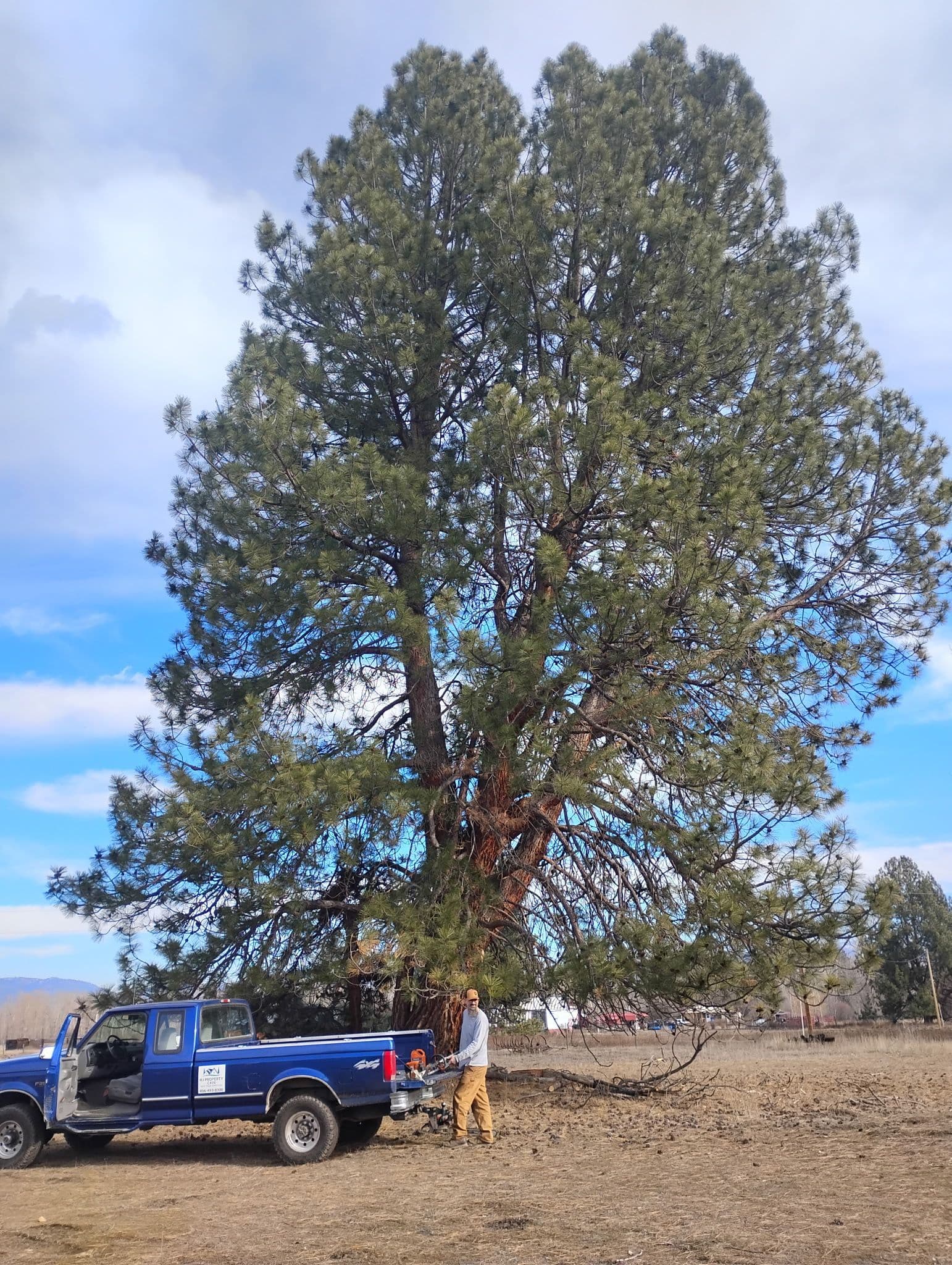
Lower-growing, high-moisture, well-maintained plants are far safer near a home than dense, resinous, or oily vegetation. Many deciduous shrubs and perennials, kept green and trimmed, resist ignition better than the resin-rich conifers common in our region. Ponderosa pine, Douglas fir, and juniper are beautiful but flammable, so they belong farther from the house, well-spaced and limbed up. No plant is truly fireproof, but a watered, pruned, debris-free landscape resists fire dramatically better than a neglected one, which is why maintenance matters as much as plant selection.
How should I space and prune trees to reduce fire risk?
Trees should be spaced so their canopies do not touch and pruned so fire cannot climb from the ground into the crowns. Crown fires spread fastest, so breaking the connection between treetops slows a wildfire's advance. Remove lower limbs, often up to six to ten feet from the ground depending on tree size, to eliminate ladder fuels, the lower branches and brush that let flames climb from grass to canopy. Clear dead branches, fallen needles, and accumulated debris, since these fine fuels ignite easily and carry fire toward your home.
What maintenance keeps defensible space effective?
Defensible space is not a one-time project; it requires ongoing seasonal maintenance to stay effective. Conifers constantly shed needles that pile on roofs, in gutters, and under decks, creating ready tinder if ignored. Each spring and fall, clear dead vegetation, rake up needle litter, cut back grasses, and prune away new growth that bridges gaps you previously opened. Keeping irrigated plants healthy and hydrated through the dry season also matters, because stressed, drought-killed vegetation becomes fuel. A seasonal clean-up routine is the engine that keeps your buffer working year after year.
Can I create defensible space without clear-cutting my yard?
Yes, effective defensible space is about smart management, not stripping your property bare. The goal is to interrupt the continuity of fuels, not to remove every tree and shrub you love. Thoughtful spacing, strategic pruning, healthy irrigated plantings, and fire-resistant hardscape can give you a landscape that is both attractive and far more defensible. A professional can help you keep mature shade trees while still reducing risk, balancing beauty, privacy, and safety so your yard remains a place you enjoy rather than a fortress of gravel.
Protect your home before fire season arrives. HJ Property Care & Tree Service LLC designs and maintains wildfire-smart landscapes, defensible space, and tree thinning across the Missoula area and Bitterroot Valley. Call (406) 493-8300 for a free 48-hour estimate and a plan tailored to your property.
Need help?
HJ Property Care & Tree Service is locally owned and ISA-certified. Call for a free estimate.
About the author
Adam HurlbertOwner & Founder
Adam Hurlbert is the founder and owner of HJ Property Care & Tree Services. He earned a B.S. in Business Management from Dickinson State University in 2012 and soon after built a successful landscape company in Dickinson, North Dakota — completing hundreds of residential and commercial projects, from irrigation installs and retaining walls to complete landscape development for new construction.
Ready to transform your outdoor space?
Get a free, no-obligation estimate within 48 hours. Locally owned and ISA-certified.